
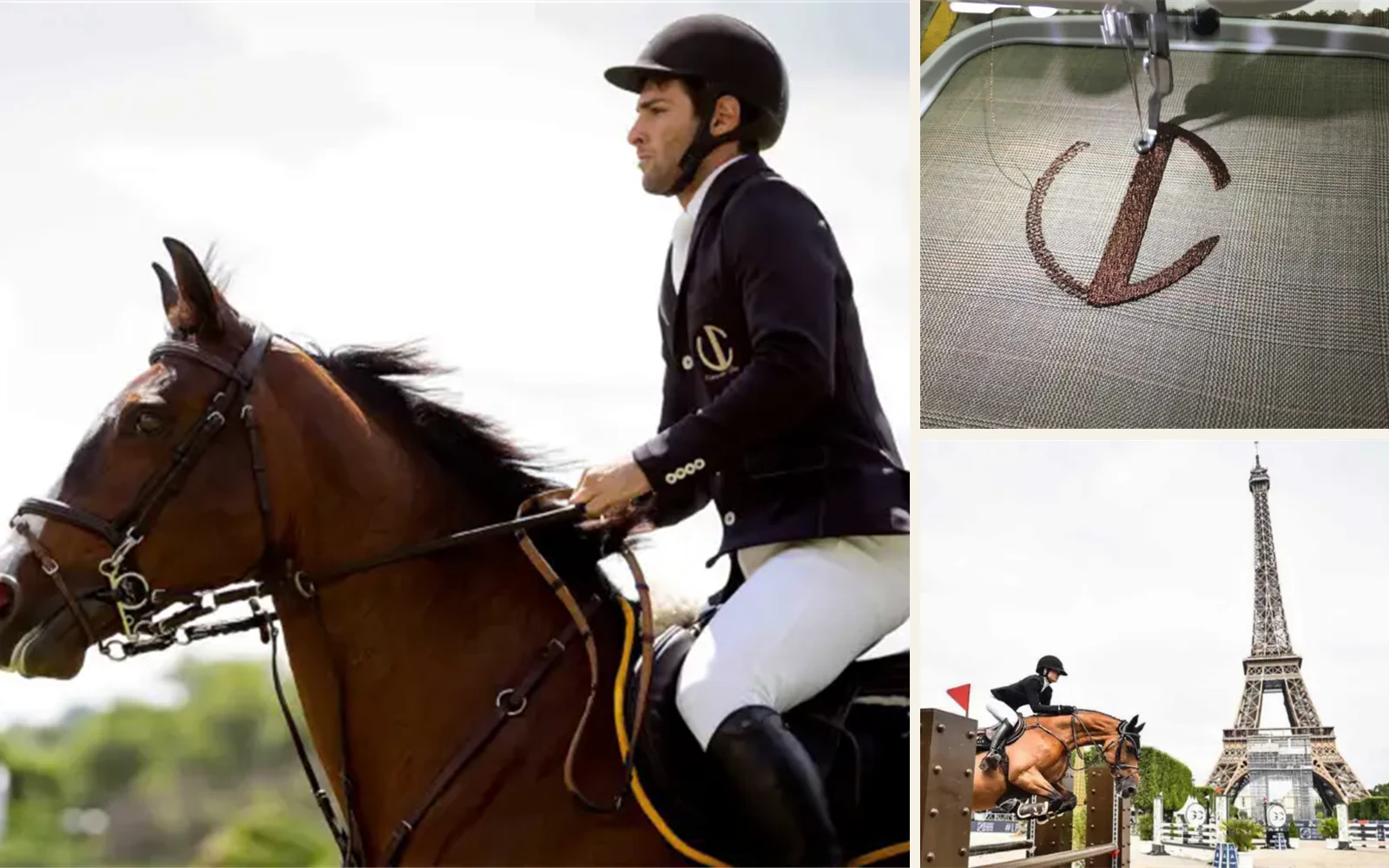
An old competition photograph can look complete. The horse is framed, the rider is composed, the jacket is visible and the arena sits behind them. Yet without a date, a place and a reason for keeping it, almost everything that gives the image meaning begins to disappear.
A visual archive is not a folder of attractive files. It is the connection between image and context: who was there, what was being made, which stage of the brand the garment belonged to and how that moment changed what came next.
An image is evidence before it is nostalgia
Seen years later, an early jacket reveals more than a former style. Its lapel, buttons, embroidery and proportions show the decisions a brand knew how to make at that moment. The photograph also preserves the relationship between tailoring and movement—something a garment laid flat can never explain on its own.
That is why the archive must keep imperfect but truthful material alongside polished campaign images. A close view of embroidery in progress may carry little spectacle, but it records the making. An arena photograph may not have been produced as advertising, yet it proves that the garment left the worktable and entered the sport.
Context is what makes an image searchable
A filename can tell us that a photograph exists. A precise caption tells future readers what it contains. Date, location, event, garment, person, horse, photographer and the nature of a commercial relationship are not administrative details; they are the coordinates that let a story be found and understood.
When one of those details is uncertain, the most valuable choice is restraint. “Archive image, date unconfirmed” protects the record better than a confident invention. Accuracy allows the same image to move responsibly between a Journal story, a press page, a media kit and a future history without changing its meaning each time.
Photograph the whole story, not only the finish
Luxury is often photographed at the moment of completion. Memory needs more angles. It needs the full silhouette in motion, the collar at close range, hands at work, thread meeting fabric, a team seen together and the jacket after it has travelled.
These distances answer different questions. The arena view shows presence. The medium view shows fit and proportion. The detail shows construction. The workshop reveals process. Together they explain how a piece was imagined, produced and lived in—without asking one heroic photograph to carry an entire history.
Preserve change instead of hiding it
A living brand does not look identical forever. Symbols become more precise, silhouettes change, materials improve and the audience expands. If the archive keeps only the most recent expression, that evolution becomes invisible.
Vainqueur's own visual record connects the symbol taking shape in Brazil in 2016, one of the first jackets in the arena in 2017 and an international competition image in Paris in 2018. Those photographs do not need to pretend the journey was instantaneous. Their value is that they show continuity across distinct chapters of the Vainqueur story.
Rights and relationships belong to the memory
Equestrian images contain more than a brand. They contain riders, horses, teams, photographers, venues and sporting organisations. A responsible archive records permission and credit, and it distinguishes a sponsored athlete from a client, a historical partnership from a current one and an official result from a social post.
This discipline is not a footnote to storytelling. It keeps the people inside the image from being reduced to decoration and prevents a beautiful photograph from acquiring a claim it was never meant to make.
The archive is part of the product
When a rider asks for a colour, collar or embroidery that recalls an earlier piece, the archive becomes practical. It can recover a proportion, compare a construction choice or show how a visual signature behaved in the arena. Memory feeds design because it gives new decisions something real to answer.
The strongest archive is therefore neither static nor hidden. It grows with every fitting, competition, delivery and carefully written caption. It helps the brand recognise itself before asking the world to do the same.
What we preserve becomes what can be remembered
Ten years from now, the most valuable image may not be the one with the highest production value. It may be the frame that still knows who, where, when and why. Beauty draws attention; context allows beauty to endure.
A brand's history is not protected by volume. It is protected by selection, truth and continuity—the quiet work of keeping every important image attached to the story it belongs to.
The images in this essay belong to the Vainqueur Cheval authorised archive. Their captions follow the context already verified for the brand's permanent history page; no unidentified rider, horse or event has been inferred.