
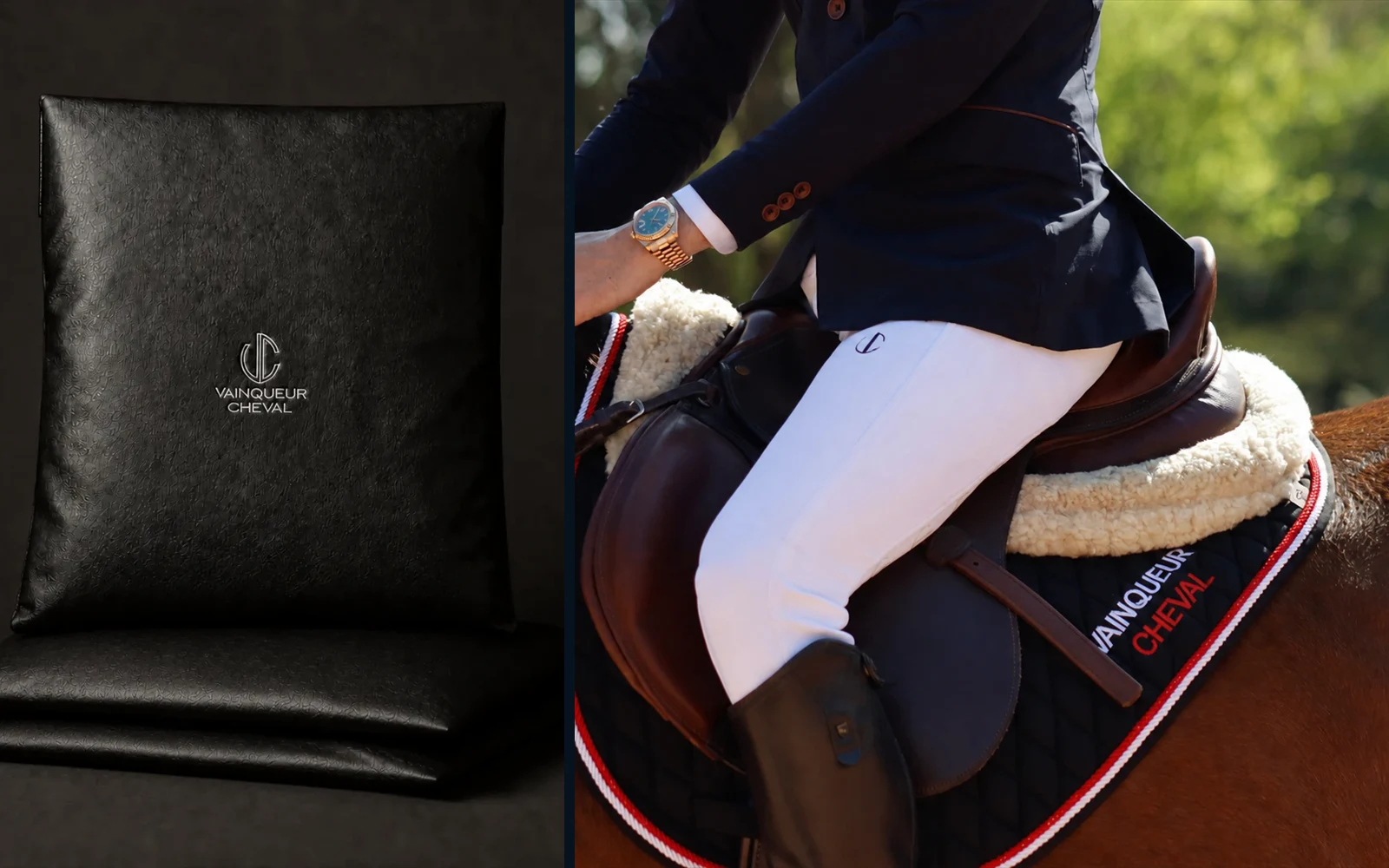
A show jacket often has the smallest space in the largest operation. Boots, helmets, tack, documents and stable equipment compete for attention, while the garment expected to look composed in the arena can be folded into whatever corner remains.
That is where avoidable creases, pressure marks and last-minute improvisation begin. Travelling well with a competition jacket is less about a clever packing trick than about treating departure, transit and arrival as one continuous routine.
Begin with a jacket that is ready to travel
Do not pack the jacket directly after the final training session or while it is still holding heat or moisture. Empty the pockets, inspect the collar, cuffs, buttons and applications, and follow the garment's own care label if cleaning is required. The goal is simple: only a completely dry jacket should enter a closed bag.
This first check also prevents small problems from arriving at the show. A loose button noticed at home is a repair. The same button noticed minutes before the class is a distraction.
Give the shoulders a structure
The shoulder line carries much of the jacket's visual architecture. When the garment is hung, use a broad, smooth hanger that supports the shoulder without creating a hard point. When hanging is impossible, fold only as much as the journey requires and avoid placing heavy objects on top.
Close the main buttons lightly before packing so the front panels remain aligned. Keep sharp hardware, hook-and-loop fasteners and anything that may transfer colour away from the fabric. A breathable garment cover protects from friction and dust while allowing the jacket to avoid the sealed, compressed conditions of a plastic bag.
Choose access over maximum compression
A competition jacket should not be buried beneath the densest part of the luggage. Pack it where it can be removed without dismantling the whole case. This matters during long trips, unexpected overnight stops and any journey where the main luggage may not arrive at the same time as the rider.
For air travel, many riders keep the most difficult-to-replace competition pieces within the applicable cabin allowance. Every airline and event journey has different rules, so the principle is not a universal packing list: it is to identify what would be hardest to replace and make a deliberate plan for it.
Arrival is part of the journey
The most useful travel habit happens before the jacket is needed. Unpack it as soon as practical, place it on its hanger and let the fabric recover in a dry, ventilated space. Do not wait until the call for the class to discover what hours of pressure have done.
If creasing remains, use only a method compatible with the care label and the jacket's materials. Heat, steam, pressing cloths and professional finishing are not interchangeable across fabrics, linings and applications. When uncertain, restraint is safer than an aggressive hotel-room experiment.
Build a small jacket kit
A compact kit can remove much of the urgency from show day: the correct hanger, a breathable cover, a clean lint brush, a soft cloth and the spare components supplied or approved for the garment. Keep the care information with the kit rather than relying on memory in an unfamiliar venue.
The kit should solve predictable problems without becoming a portable workshop. Alterations, stains or damaged applications deserve the right professional response; they should not be improvised between classes.
Plan the return before the first round
The jacket rarely leaves a show in the same condition in which it arrived. Heat, arena dust, rain and contact with the horse can all follow it back to the hotel or truck. After the last round, repeat the first inspection, allow the garment to air and separate anything damp or dirty before repacking.
This is where travel and long-term care meet. The return journey should not trap the evidence of the weekend inside a closed case. Once home, complete the full post-competition storage routine instead of leaving the jacket in transit mode.
A composed entrance is prepared off camera
By the time a rider enters the arena, the jacket should no longer demand attention. That quiet result is produced hours earlier: a dry garment, supported shoulders, enough space, early unpacking and a plan for the journey home.
Travel care is not separate from presentation. It is the invisible work that allows the silhouette designed in the atelier—and approved during the fitting—to arrive at the arena intact.
Always follow the care label supplied with the garment. Fabric, lining, decorative applications and construction can require different handling; this editorial is a planning framework, not a replacement for product-specific instructions or professional cleaning advice.