
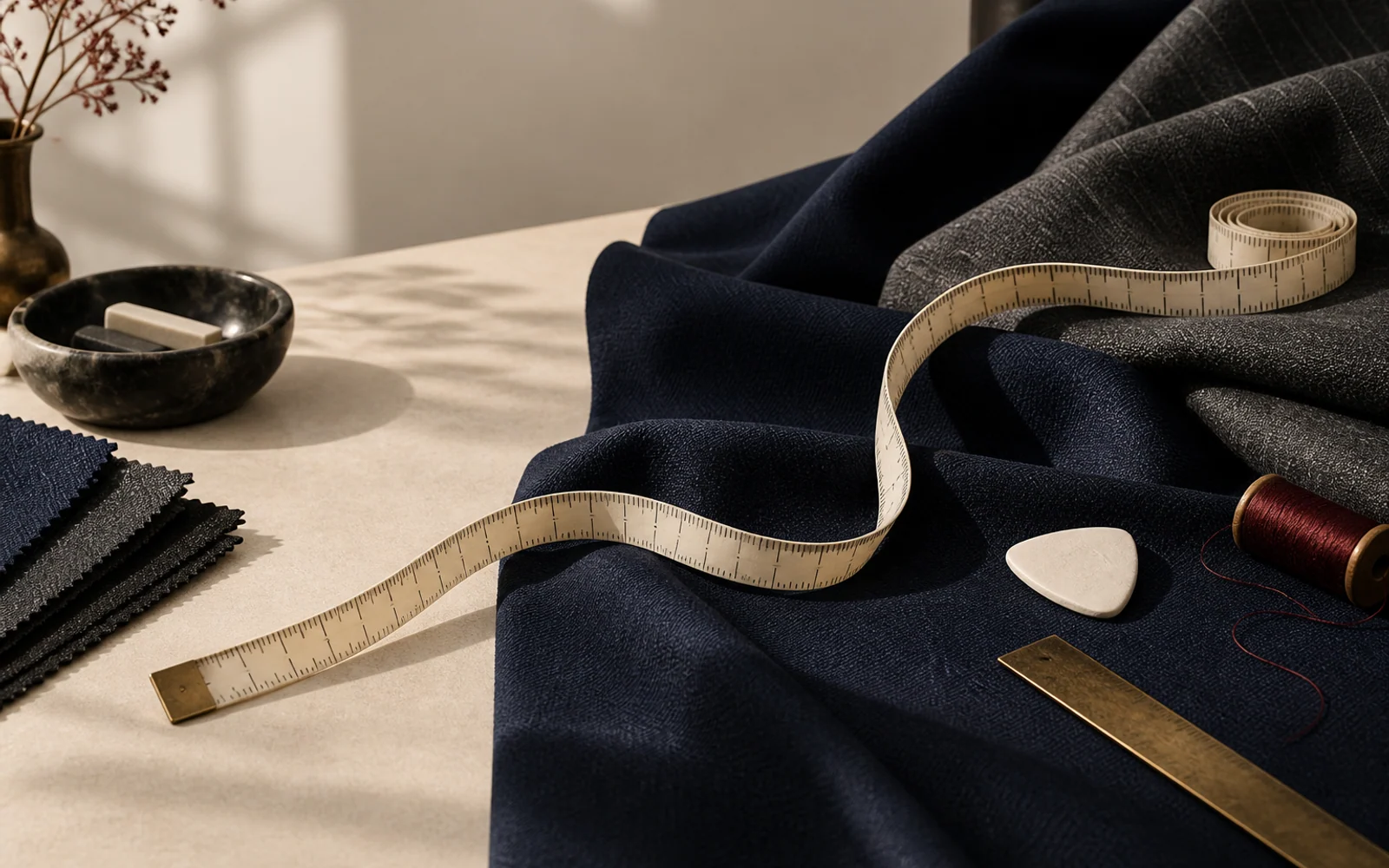
A tape can lie perfectly flat, the number can be read correctly and the result can still describe the wrong body. Measure over a thick layer, hold the breath, pull the tape a little tighter or extend the arm differently, and the figure remains exact only for that brief, artificial moment.
This is why reliable sizing begins before the first measurement is written down. The objective is not to make the body appear smaller, straighter or more symmetrical. It is to create a repeatable description of the rider as they actually are, using the same landmarks and the same calm conditions from beginning to end.
Prepare the moment you want the numbers to describe
Competition clothing lives over other clothing. Measurements taken over a heavy sweatshirt do not describe the same situation as measurements taken over a light riding shirt. For Vainqueur's guided body-measurement flow, light clothing gives the tape a clearer relationship with the body. Empty pockets and a natural, relaxed posture remove two more variables before the process begins.
Time matters less than consistency. What matters is avoiding a body temporarily altered by tension: shoulders lifted after rushing, the stomach deliberately drawn in, the chest held at the top of an inhale. The rider should be able to breathe and stand normally while the tape records them.
A second person protects the geometry
Measuring alone is possible in some places and unreliable in others. The moment a rider twists to read the tape behind the body, the posture being measured has changed. Back width, sleeve length and jacket length are especially sensitive because they depend on landmarks that are difficult to see and hold at the same time.
A helper does more than read the number. They can check whether the tape remains level, whether it has slipped away from the intended point and whether the rider is leaning to compensate. Their most valuable role is not expertise; it is allowing the rider to remain still.
The tape should touch, not negotiate
At the chest, waist and hips, the tape needs to stay flat and level. If it compresses the body, the number belongs to the pressure of the hand. If it hangs away, it measures air. The right contact is quiet: close enough to follow the form, relaxed enough that the body remains unchanged underneath it.
That same discipline applies to the tape itself. A twist changes the reading. A diagonal line around the torso travels farther than a horizontal one. Fingers placed under the tape add an unrecorded allowance. The method works when nothing is secretly added and nothing is deliberately removed.
Posture changes vertical measurements
Circumferences describe volume; vertical measurements describe where the garment begins and ends. The sleeve is measured with the arm slightly bent, following the route from the shoulder point towards the wrist over the elbow. A fully straight arm produces a different line from the one the sleeve follows when the rider takes the reins.
Jacket length and back width also depend on stable reference points. The value is useful only if the same point would be found again on a second attempt. This is one reason photographs or a helper's notes can be more useful than memory when a measurement needs to be repeated.
Repeat the method, not only the number
When two readings disagree, averaging them can hide the problem instead of solving it. Release the tape, return to the original landmark and repeat the entire movement. Was the rider standing differently? Did the tape move from the fullest part of the chest or hips? Did the arm bend change? The discrepancy is information: it reveals which part of the method is not yet stable.
A clean record should keep the full set together. Date, light layer worn and the person who helped can be useful context. More importantly, chest, waist, hips, back and lengths should be read as one description. No single number carries the whole silhouette.
Body and finished garment remain different languages
A body measurement is not a finished-jacket measurement. The jacket already contains construction, planned ease and the proportions of its base pattern. Treating the two charts as interchangeable can make a perfectly accurate number lead to an incorrect conclusion.
Vainqueur's online process starts from an official finished-jacket size. The guided flow collects the body measurements, checks the set for possible inconsistencies and compares it with the garment specifications before production. When the relationship requires attention, the case can move to human review. Eligible sleeve and jacket-length refinements may be considered after the correct base size is established; they do not rebuild the chest, waist, shoulders or full pattern.
Accuracy is a habit of attention
The most trustworthy measurement session is rarely the most elaborate. It is simply controlled: light clothing, natural posture, a flat tape, consistent landmarks and another person where the geometry demands it. The numbers become useful because the conditions stop competing with them.
A measurement is a small act of translation. It turns a moving body into a set of values that another person and another process can understand. The goal is not to produce the smallest figure or the most flattering one. It is to make that translation honest enough to guide the next decision.
This editorial is based on the current guided body-measurement instructions in the Vainqueur Digital Atelier. Follow the placement shown at each step and keep body measurements separate from finished-jacket measurements.