
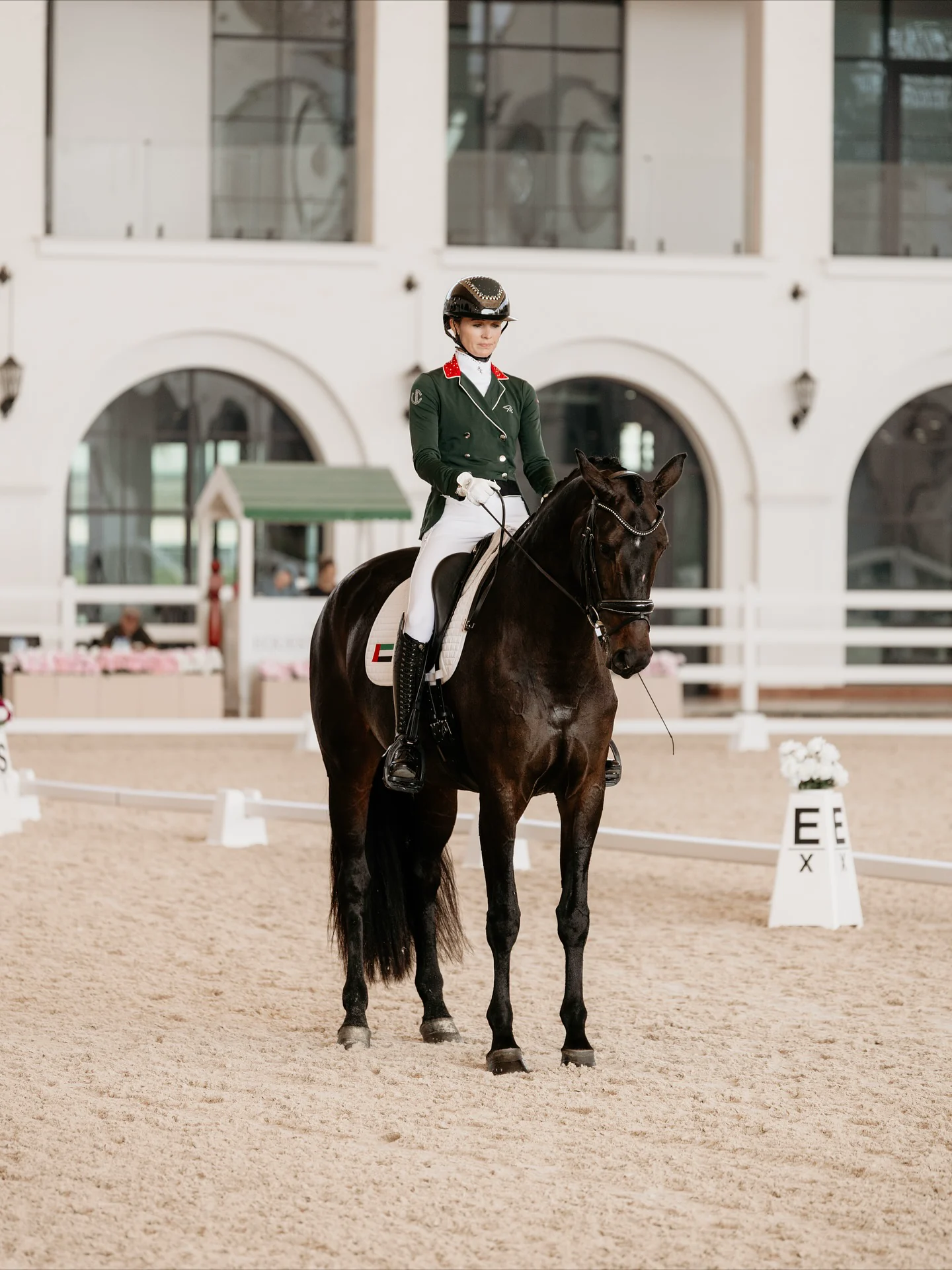
The movement ends, and the eye is tempted to move on. A horse has travelled across the diagonal; another figure is about to begin. For a spectator discovering dressage, that interval can look like a pause in the action. It is a better place to keep watching.
Instead of treating a test as a collection of spectacular moments, try following the connections. The question changes from “Which movement was that?” to “How did the combination arrive there?” This is a spectator's reading of the sport: less a hunt for an impressive photograph than an interest in the sequence around it.
A transition is more than changing gear
In the FEI's feature on transitions, Sönke Rothenberger discusses changes both between gaits and within a gait. Patrik Kittel stresses balance and responsiveness; Severo Jurado Lopez describes preparing an extended trot before it starts. Different riders, but a shared concern: the next movement does not begin from nowhere.
That distinction gives the viewer something specific to follow. Watch the approach, the change itself and the strides immediately after it. Do not stop looking at the instant the horse changes gait. A dramatic moment can draw attention away from its quieter surroundings.
Stillness has a context
In an FEI test-riding lesson with Olivia Towers, international judge Isobel Wessels considers the centre line and halt alongside the links between movements. Accuracy matters, but so do a responsive transition and a square, still halt. Fluency is part of the discussion, not an optional embellishment.
For the viewer, a halt offers a useful change of scale. There is no sweeping diagonal to follow. Attention falls on a small space, and on the arrival and departure as well as the moment of standing. Resist the urge to judge it from a single frozen frame: watch the whole passage.
Completion is not the same as quality
The FEI's introduction to scoring explains that individual movements receive marks out of ten and contribute to the percentage result. Recognising a movement is therefore only a beginning; the score also asks how well it was performed.
A spectator need not impersonate a judge to find that interesting. Compare your impression with the published marks when they are available, and allow the difference to raise questions. A number can invite closer observation without becoming a verdict on everything about the partnership.
Watch once for the highlights, again for the links
On a replay, choose one passage and follow it past its apparent ending. Look at what comes before the change and what happens after it. This is an invitation to pay attention, not a substitute for coaching or a method for diagnosing a horse from video.
The photograph may preserve the movement that first caught your eye. Watching the connections gives the performance more room to tell its story. Next time the obvious highlight finishes, stay with the combination for a few more strides.
FEI — Test Riding: What the Judges Look For · FEI — The Value of Transitions · FEI — Dressage Scoring Basics. Consulted on 2 October 2026. These FEI educational features inform an editorial spectator's perspective, not a current-rule summary or training prescription. Natalie Lankester is a current Vainqueur-sponsored athlete; the article does not assess her performance. Authorised archive photograph, with original visual details preserved.