
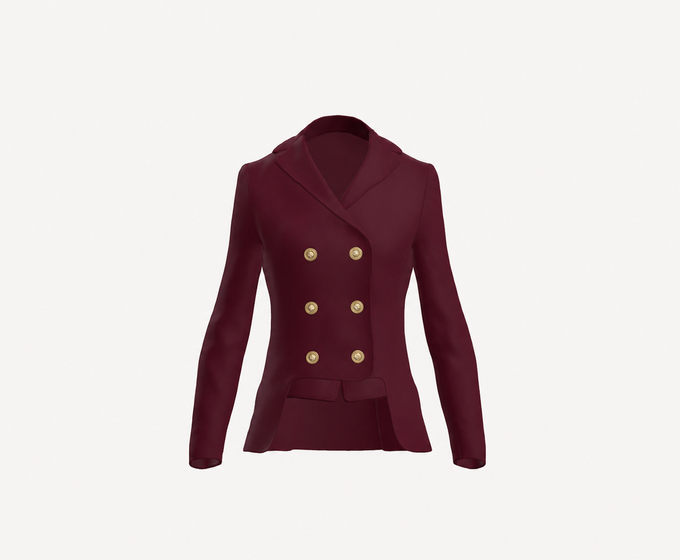
Equestrian elegance is often visible before it is understood. A rider enters the frame and something feels composed: the line is calm, the details are deliberate and nothing appears to compete with the performance.
It is tempting to call that effect aesthetic. Yet appearance is only the surface. The impression begins much earlier—in the way a jacket follows the body, survives a change of position, carries colour and returns attention to the rider rather than demanding it for itself.
Seen in a second, built over time
Arena presence is read quickly. The eye catches the silhouette first, then contrast, colour and smaller applications. But the simplicity of that first impression is the result of many decisions: where the jacket ends, how the front closes, how the collar frames the shirt and which detail deserves to be noticed.
When those decisions agree, the result feels effortless. When each is trying to become the main event, the outfit becomes louder but not necessarily more memorable.
Elegance is coherence, not decoration
A beautiful colour cannot rescue an uncertain proportion. An expensive button cannot organise too many competing accents. Embroidery cannot create identity if its placement feels disconnected from the rest of the jacket.
Coherence asks a stricter question: does every choice support the same intention? A deep base colour, a restrained piping line and one warm metal finish can form a complete vocabulary. Another jacket may use contrast more boldly and still feel elegant, provided the hierarchy remains clear.
Movement is the real test
A competition jacket is not observed only while the rider stands still. It is worn through the positions, repetitions and small adjustments of riding. The line that looks clean in a mirror must remain convincing when the arms come forward, the torso changes angle and the rider settles back into the saddle.
This is where style and function stop being separate subjects. Freedom through the shoulder, controlled length and a front that closes without strain are practical qualities. They also determine the visual result. Movement exposes every unresolved decision.
Fit is the architecture
Before colour and application, there is structure. The shoulder establishes the first line. The collar creates the frame around the face and shirt. Sleeve length controls the transition to the glove. Jacket length changes the relationship between torso, saddle and leg.
Good fit does not mean forcing the body into a rigid shape. It means giving the design enough order to follow the rider. That is why a jacket should be assessed in the posture in which it will actually be worn, not only in a neutral fitting-room stance.
Restraint gives a signature room to exist
Personalisation is most powerful when it is edited. A collar can carry the central contrast. Buttons can provide the single metallic note. A name, flag or monogram can remain close enough to be discovered rather than announced from every distance.
Restraint is not the absence of creativity. It is the decision to protect the strongest idea. The rider remains recognisable because the details are working together instead of asking for separate attention.
Care continues the design
The appearance of a jacket on competition day depends on what happened after the previous one. Allowing it to air, following its care label, checking the closure and storing it with space are not glamorous rituals, but they preserve the line the design was meant to create.
Elegance therefore extends beyond the moment of entry. It includes preparation, handling and the discipline of returning the garment to the next event ready to perform its role again.
Five questions before approval
1. What should the eye notice first?
2. Does the jacket still look composed in riding position?
3. Is each accent supporting one visual idea?
4. Would removing one detail make the design clearer?
5. Does the final image reveal the rider—or hide them?
These questions turn taste into a process. They do not produce one correct style; they make the intention visible. Classic, modern, quiet or expressive can all feel elegant when proportion, movement and identity remain in agreement.
The rider should remain the focus
The finest jacket does not erase personality, and it does not overwhelm it. It gives the rider a clear frame in which confidence, preparation and individual presence can be seen.
That may be the most useful definition of equestrian elegance: not decoration placed over performance, but purpose made visible.
This editorial reflects Vainqueur's design and fitting process and the personalisation choices currently available in the Vainqueur Digital Atelier. Competition dress requirements vary by discipline and event; riders should always verify the applicable regulations and follow the care label supplied with their garment.