
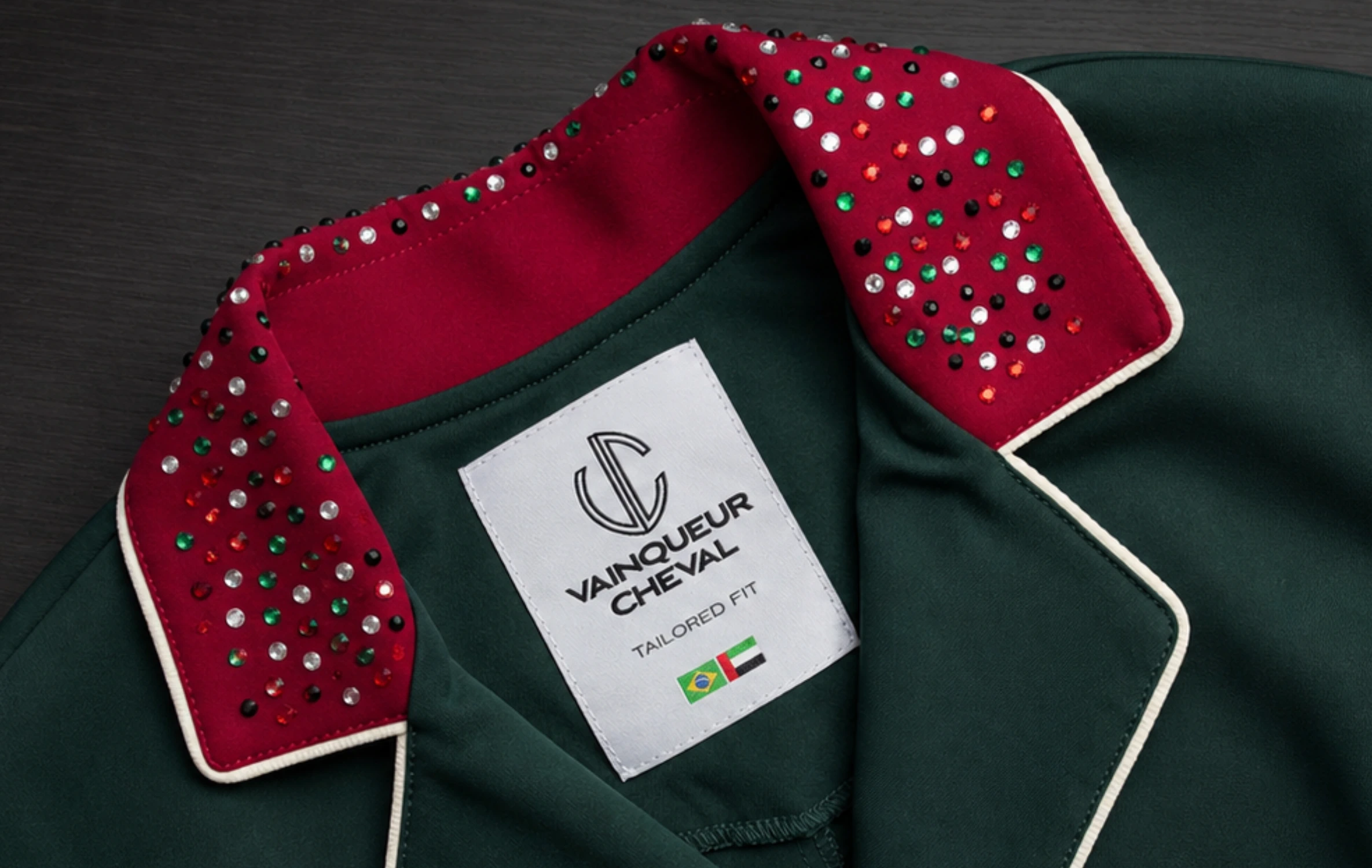
A swatch can show a colour. A sample can show a trim. A list can name every personal detail. None of them, alone, can show the jacket that will walk into the arena. That is the problem a three-dimensional preview is designed to solve: it turns separate decisions into one visible composition before production begins.
Custom design is often described as freedom, but freedom without context can be surprisingly difficult. Navy may feel certain until the collar changes. A discreet piping choice may become the line that defines the whole silhouette. Buttons that look decorative in isolation can either bring balance to the front or compete with everything around them. The decision is rarely about whether one element is beautiful. It is about whether all of them belong to the same jacket.
From a list of options to a point of view
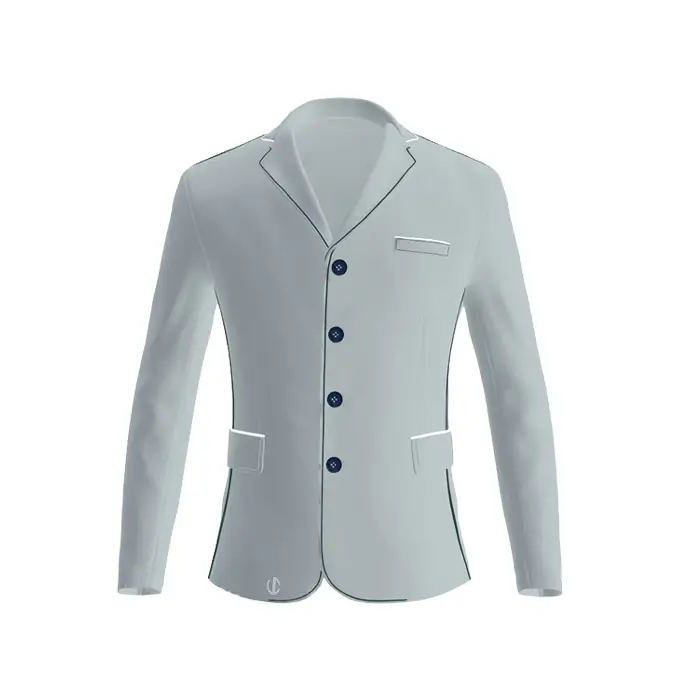
The Vainqueur Atelier brings colour, collar, piping, buttons, lining and personal applications into the same digital model. As each selection changes, the jacket changes with it. A rider can rotate the piece, zoom into the details and look again from an angle that a flat sketch cannot provide.
This does more than make customisation easier to understand. It changes the conversation. Instead of asking whether gold buttons are attractive, the rider can ask whether gold is the right note against that fabric, that collar and that piping. Instead of imagining where a name, flag or team mark will sit, the application enters the visual hierarchy of the piece.
The value of changing your mind early
There is a useful moment in every custom process when an idea stops sounding right and starts looking right — or does not. Three-dimensional visualisation creates that moment while the design is still reversible. A rider can remove an accent, quieten a contrast or strengthen the collar without asking a finished garment to absorb the experiment.
That matters because good custom design is often an exercise in editing. The strongest jacket is not necessarily the one with the greatest number of visible options. It is the one in which every element has a reason to stay. The preview helps distinguish a signature from an accumulation.
A tool for individuality — and for teams
For an individual rider, the model creates room to explore identity without losing proportion. A national reference can be present without becoming literal; a personal colour can live in the lining, piping or collar; a name can be placed as a finishing note rather than a headline.
For a team, the same process works in reverse. The shared language comes first, then each jacket can be considered within it. The model makes it easier to judge whether a repeated accent is strong enough to unite several riders and restrained enough to preserve the individual wearing it.
What a 3D preview can — and cannot — decide
A digital render is a design aid, not a substitute for fabric, measurement or final fitting. Screens reproduce colour differently, texture must still be understood through the real material, and fit belongs to the body in motion. The preview answers a different question: before committing to production, does the composition say what the rider intended it to say?
That is why the 3D stage belongs before the first stitch, not instead of the craft that follows it. It creates a clearer brief for the workroom and a more informed decision for the rider. When the jacket finally exists in fabric, fewer of its details are accidents.
When designing a custom show jumping jacket, the Atelier allows riders to configure colours, collar, piping, buttons, lining, logos, names and flags, then rotate and zoom the model before sending the design for human review. The visualisation supports the decision; final colour, material and fit are confirmed through the production process.