
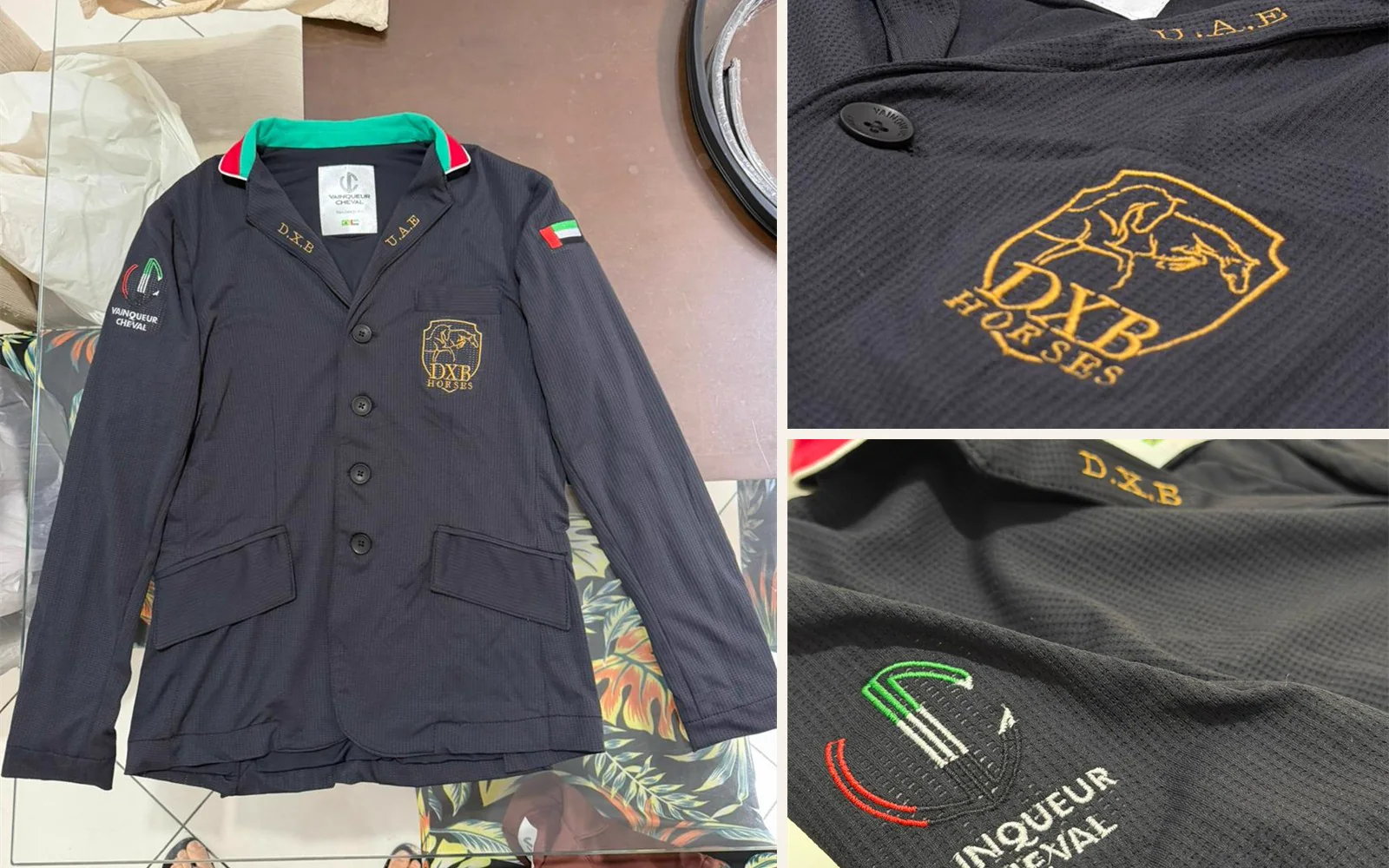
A team can agree on a colour in five minutes and still be weeks away from a production-ready order. Between the first idea and the finished jackets sit the decisions that make the difference: which elements belong to everyone, which remain personal, how every rider will be measured, who approves the design and where the final version is recorded.
The production brief is where enthusiasm becomes precision. It should allow the team, the designer and the people making the garments to look at the same information and understand the same jacket—without relying on memory, scattered messages or a screenshot whose context has disappeared.
One design, several bodies
The phrase “team jacket” can suggest a uniform object. In practice, the visual identity may be shared while the garment itself remains individual. Riders differ in height, posture, shoulder line, torso length and the way they sit in the saddle. A team order therefore needs two layers from the beginning: a collective design record and an individual fit record for each wearer.
Separating those layers protects both. The shared design does not drift as measurements arrive, and individual fit is not reduced to copying the proportions of the first approved jacket.
Define what is fixed—and what may move
The strongest brief starts by marking every decision as either fixed, optional or personal. The base colour, team emblem and main construction details might be fixed. Initials, a rider name, national reference or a discreet accent may vary. Model and proportions may need to follow each rider while still preserving the team's overall line.
This is not only a style exercise. A fixed-versus-variable map prevents two common problems: accidental inconsistency and unnecessary uniformity. The team remains recognisable, yet nobody is forced into a detail that does not fit the rider, discipline or role.
Create one source of truth
Every team order benefits from a single master record. At minimum, it should identify the wearer, jacket model, measurement status, shared colour specification, personal applications, spelling of names or initials, placement of logos and flags, approval status and delivery destination.
The important word is single. When one change lives in a messaging app, another in a spreadsheet and a third in a marked-up image, nobody can be certain which version is final. A useful brief gives each jacket its own line and gives the entire team one current version number.
Measure every rider as an individual
A team order can share design decisions; it cannot safely share measurements. Even riders who wear the same commercial size may need different sleeve, jacket and torso proportions. The measurement method should also be consistent: same reference points, similar base clothing, clear posture and a second check when a number looks unusual.
That discipline matters because measurements are not a verdict by themselves. They become useful only when the method behind them is trustworthy and when the intended model is already known. Our guide to trustworthy jacket measurements explains that preparation in more detail.
Translate the visual idea into production language
“Navy with gold” is a direction, not a specification. A production brief needs to describe where each colour appears and what each detail actually is: body, collar, piping, topstitching, buttons, lining, emblem, initials, name and flag. Scale and placement matter as much as the artwork itself.
A three-dimensional preview can help the team see those choices together before production. It can reveal when one accent competes with another or when a logo feels disconnected from the jacket's lines. The preview is a decision aid; final material, colour, artwork and fit still need human confirmation.
Build an approval ladder
Approval is clearer when it moves in a deliberate order. First, approve the collective architecture: model, palette and shared identifiers. Next, approve the individual data: measurements, names, initials and personal details. Finally, review a complete production summary that shows both layers together.
One named decision-maker should close each stage. That does not remove the riders from the process; it prevents contradictory instructions from reaching production after a choice has already been settled.
Plan the unglamorous details early
Deadlines, delivery locations and late roster changes rarely appear in a moodboard, yet they can determine whether a team order succeeds. The brief should record the event or use date, the practical delivery window, whether garments travel to one address or several, and what happens when a rider joins after the first batch is approved.
Those details also make future additions easier. If the team's design logic is documented, a new rider can be added without reopening every visual decision or guessing which file represented the final jacket.
Discipline preserves creativity
A production brief may sound restrictive, but its purpose is the opposite. It gives creative decisions somewhere stable to live. The stronger the record, the less energy is spent resolving avoidable ambiguity—and the more attention can remain on proportion, identity and the final presence of the team in the arena.
One team does not require identical jackets. It requires a shared idea, translated with enough care that every individual garment still belongs unmistakably to the same story.
This article presents an editorial framework, not a fixed promise of process for every order. Team size, models, artwork, materials, timing and delivery needs are confirmed through human review. Vainqueur's Digital Atelier can support visual decisions before that final confirmation.